Tuesday, 16 April 2013

Taste Africa (Part 3)

Taste Africa (Part 3)

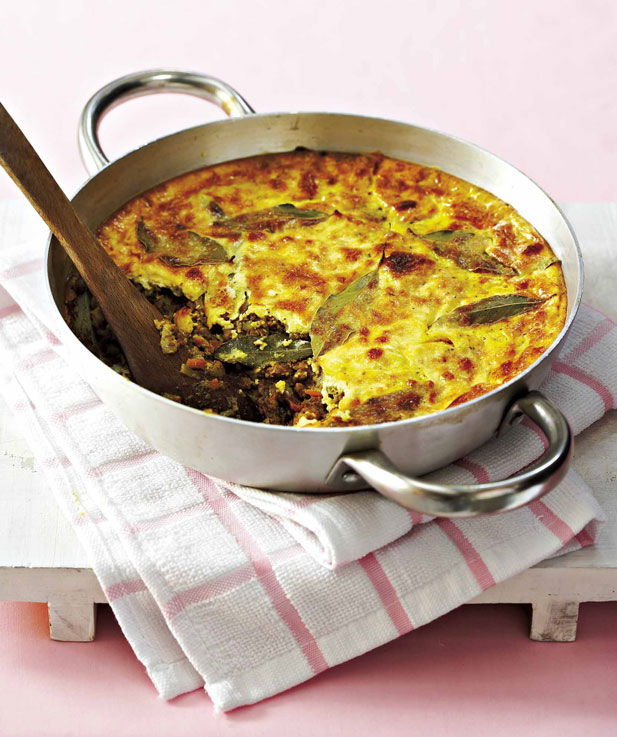
WINE 3 - with Sosaties (beef kebabs infused with a Cape Malay sweet & tangy curry marinade) and Bobotie (a Cape Malay dish of ground beef, curry, apple & currants served with yellow rice).

Spice Route Chakalaka 09– RRP & Our Cost $26.90 (from Scenic Cellars) 14.5% Alc/Vol

Spice Route’s signature style has always been robust, spicy red wines, rich in character.


The sosaties were grilled on authentic Namibian hard wood charcoal, 
obtained from Vince and Trish's Mitre 10 Mega establishment. 


This blend of red varietals represents a fusion of flavours, as does the unique, spicy South African relish from which Chakalaka takes its name. 37% Syrah, 21% Mourvedre, 18% Carignan, 10% Petite Sirah, 10% Grenache and 4% Tannat.


The Winemaker, Charl du Plessis says “ A larger proportion of Petite Sirah was added to the blend this year, giving the wine intense colour and structure, which will benefit the aging potential of the wine.

The 2009 was a fine vintage and the red wines generally were of very high quality. Intense red-purple in the glass, initial smoky cloves and savoury notes give way to a plum and black cherry nose with hints of sweet oak spice. Medium bodied with well-integrated oak and fruit, this wine has a smooth tannin structure and lingering spice flavours.


Semi-arid conditions near Malmesbury, north of Cape Town, where Spice Route is grown.
The original farm house still exists  on the estate.


WINE 4 - with Koeksisters (meaning “twisted sisters) – a doughnut like dough twisted, deep fried the dunked into an ice-cold flavoured syrup) and Melktert (meaning “milk tart”) – a velvet custard with a cinnamon topping.

Simonsvlei Humbro NV Hanepoot –Our Cost $19.90 (from OnTrays 19% Alc/Vol

From a vineyard situated in the Paarl region with soil types of granite to clay comes this full-sweet dessert wine with typical Hanepoot or Muscat and litchi flavours. Great as an appetizer or a way to finish a meal with Blue cheese and preserves, baked puddings or just chilled on its own.


Simonsvlei is a co-operative wine cellar , drawing its grapes mostly from the Paarl and Franschoek wine regions to the north of Cape Town

Muscat
Four principal varieties exist of the muscat grape, including Muscat of Alexandria, Muscat Blanc, Muscat Hamburg, and Muscat Ottone. The most widely propagated and also most representative of the family character is Muscat Blanc, known as Muscat Frontignan in France and Moscato di Canelli in Italy.In the New World it is called Lexia or Zibibbo (Australia), Hanepoot or Humbro (South Africa)


The grape is thought to originate in North Africa. Most plantings of this white varietal used to produce raisins and table grapes. The Hanepoot ("Rooster's Foot" in Afrikaans); refers to the characteristic pattern and split of the grape when it is ripe, resembling a rooter's foot:


I do like Don's interpretation of "Honey Pot", as this sweet, fortified wine does bring honey to mind. Muscat has been produced in South Africa since the 1600s, and is said to have been Napoleon's favourite tipple.Cetainly records show great quantities of the wine being exported from the Great Constantia Estate in Cape Town to Napoleon's Court.

Each muscat produces, with subtle variation, wines with the distinct, intense, aromatic, sweet, and easily-recognized scent of muscat and, unusual for most wine varieties, that actually taste like grapes. 

Muscat is a very ancient variety and, with its strong and distinctive perfume, was probably one of the first to be identified and cultivated. Nearly every Mediterranean country has a famous wine based on muscat and varying from light and bone dry, to low-alcohol sparkling versions, to very sweet and alcoholic potions
.
Main features : The muscat vine is not very vigorous in most soil types, especially sandy mixtures, and seems to prefer damp, deep soils. It also falls victim quite easily to any of several vine diseases. Normally early in budding, muscat may also suffer from Spring frost. All things considered, muscat would not seem to be a grape that would be cultivated so widely as it is.

Oenological potential :The full name is Muscat Blanc à Petits Grains and the berries are quite small and round, but not always white. The spectrum includes pale green, pale yellow, golden, pink, red, brown, and black berries. Some vines produce fruit that can be different colored each vintage. Coriander, peach, orange, tropical fruits, floral best if not aged in wood

Use : Muscat de Beaumes de Venise, Muscat de Lunel, Muscat de Frontignan, Muscat de Mireval, Muscat de Saint Jean de Minervois, Muscat de de Rivesaltes,


Simonsvlei cellars


Wine makers at Simonsvlei


Final course: Cheese board with delectable delicacies from On Trays Food Emporium: 
NZ Cheeses and Biltong and Droee Wors (Dried SA Sausage)


Restauranteur and Coffee Roaster Michael Chin and his staff from Beijing, China, Herman and Jeanine 's Guests, along with new member Glenn Charlett, and Tai Jensen, PartyPerfect's senior chef.

Wednesday, 27 March 2013

Taste Africa (Part 2 of the March 2013 Meeting)


Taste Africa (Part 2 of the March 2013 Meeting)

Otaihanga Boating Club, PartyPerfect Catering

Main Courses and Reds


WINE 2 - with Pap & Boerewors 

Kleine Zalze 2006 Pinotage
Most members picked this as a South African Red, with Graeme Yaeger hitting it right on the nose!


A SA Pinotage from the Stellenbosch region. 
Kleine Zalze 06 Pinotage – RRP $26.20 (from Ontrays) 14.5% Alc/Vol

In the making of the Kleine Zalze Cellar Selection Pinotage 2006, Johan Joubert of the family-owned Stellenbosch vineyard went back to basics following his philosophy of “quality begins in the vineyard”. He said “ The 06 Pinotage is a little like a lost son returning home – the variety has always been close to my heart, but it is sometimes difficult to handle. After a few years of experimentation, the approach we took in 06 finally resulted in the elegant cultivar fruit that we wanted to express”. Overall the wine shows excellent balance of oak, juicy and spicy fruit, and rounded tannins.

The Food: 
Pap and Boerewors (Farmer's sausage, also known as "Boerie") and 
Waterblommetjie bredie ( South African Edible Water lily or Cape Pond weed) Stew slow cooked with lamb.

Boerewors 
A traditional rustic farmer's sausage, made from coarsely minced beef combined with minced pork and spices (usually toasted coriander seed, black pepper, nutmeg, cloves and allspice). Like many other forms of sausage, boerewors contains a some fat, and is preserved with salt and vinegar, and packed in sausage casings. Traditional boerewors is usually formed into a continuous spiral, as illustrated above. It is often served with pap. Boerewors is very common throughout South Africa, as well as with expatriate communities in countries such as New Zealand, Australia, the Netherlands, the United Kingdom, the United States, and Ireland.


For our event the Boerie was cooked on authentic Namibian hardwood charcoal, obtained from Vince and Trish's Mitre 10 Mega establishment. This is a sustainable form of charcoal, harvested from intruder species that threaten the natural flora of the sub-continent.

Maize Meal "Pap" (Pronounced 'Pup"):


 An indigenous staple made from maize with consistency not unlike Italian polenta. Polenta is made from Corn, and has a yellow colour, wheras Pap (Maize meal/Putu/Shaba/Sadza) is made from Maize, and has a white colour. 


Pap, also known as mieliepap ('mealie-pup') in South Africa, is a traditional porridge made from ground maize. It is a  staple food of the inhabitants of Africa (The Afrikaans word "pap" is Dutch in origin, and simply means "porridge"). Many traditional South African dishes include pap, such as smooth maize meal porridge (also called slap pap), pap with a very thick consistency that can be held in the hand (stywe pap, as served at the event) and a more dry crumbly phutu pap.


A variety of savoury side dishes are used to accompany pap, often made from green vegetables, and flavoured with chilli or tomato. In the northern parts of the country it is eaten as a breakfast staple, with milk and sugar, but also served  with meat and tomato-stew (tomato and onion) at other meals, When having a braai (BBQ), stywe pap or phutu pap with a savoury sauce like tomato and onion or mushroom and cheese is an important part of the meal.


In the Cape-provinces it is almost exclusively seen as a breakfast food. Since mielie-meal is inexpensive, poor people combine it with vegetables. It can be served hot or, after it has cooled, it can be fried. Phutu porridge is sometimes enjoyed with spicy chakalaka (vegetable relish)  as a side dish with braais (BBQs).

 Waterblommetjie bredie


The name comes from the Afrikaans language and literally means 'small water flower stew'. It is made of meat, typically lamb, stewed together with the waterblommetjies (Aponogeton distachyos) flowers, commonly known as Cape pond weed, Cape hawthorn or Cape asparagus) which are found in the dams and marshes of the Western Cape of South Africa. The buds of are usually ready to be picked during the southern midwinter months of July and August, leading to their use in winter stews such as waterblommetjie bredie.


The taste of the stew has been described as much like stewed green beans with a hint of pumpkin.
Waterblommetjiebredie is a well-respected local delicacy in South Africa and popular with foreign tourists

Tuesday, 26 March 2013

March 2013: Taste of Africa at the Otaihanga Boat Club

March 2013: Taste of Africa at the Otaihanga Boating Club: Part 1

An African Degustation (Or an Adventure in South African Wine and Cooking)


Wine Master Stewart MacPherson
Caterer: Partyperfect Ltd
Chef: Jeanine van Kradenburg

Sunday's event at the OBC brought a multitude of South African dishes to the table, and provided a real challenge for Stewart to match the wine-list.


Stewarts notable quotes…

“I myself subscribe more to the European philosophy of life, my priorities leaning towards wine, women and, well that's about it.” -Alfie (2004) – Alfie (Jude Law)

and in view of our meal being a South African degustation, the following:-

On 27 September 2012, Ventures Africa announced that Makaziwe Mandela and Tukiwini Mandela, daughter and granddaughter of South Africa former president, Nelson Mandela, are partnering with 5 wineries (Fairview, Thelema, Hartenberg, Citrusdal and Dutoits kloof  <see later more about Fairview> ) wineries to launch a new Fairtrade wine range to the United Kingdom from their home country, South Africa.
Billed to be sold under the brand name, House of Mandela, the new wine will include a premium and sparkling set of wines that will  showcase some of the best product from South Africa.

Nelson Mandela: [as a rugby match is about to begin] Perhaps we should make a little wager?
New Zealand PM: All your gold for all our sheep?
Nelson Mandela: Well, I was thinking more along the lines of a case of wine.


So back to the event: In stead of doing it all in one go, I've decided to blog the event dish-by-dish and wine by wine, giving you a little more information on the background to the dishes and also the wines:

Arrival and Wine no 1.

Zios Albarino 2010
Pazos de Lusco,  Spain
First Course: Piri Piri prawns (LM / Mozambique style)


 Pazos de Lusco Zios 2010 Albarino - RRP$37.90 Our Cost $22.50 (from Glengarry) 13% Alc/Vol

No-one guessed this wine. The theme led everyone astray, hazarding guesses like South African Chenin Blanc (Steen) and Semillon.

It was, in fact a Spanish Albarino:

The Spanish DO Rias Baixas lies in the province of Pontevedra on the Atlantic coast between Santiago and the Portuguese border. The Albariño grape is queen here, planted on steep slopes and in small parcels, the final wines often (but not always) correspondingly expensive. For Pazos de Lusco, this is a kind of entry-level wine, “a ‘slip past the velvet ropes and have a wee peek at what we’re about’ expression. It’s a rich, expansive offering, with orange-tinged citrus and a smoky minerality ensuring complexity, and a thread of acid that binds it all in a feat of seamless integration”

Zios Albariño (100% Albarino)
Dry Still White
Alcohol: 13%
Region:Rias Baixas, Pasco Luz, Spain


Vineyards:


The 6 hectares of vineyards dedicated to the production of this wine are located near Galicia throughout the As Neves area of Rias Baixas in northwestern Spain. Planted using the Pergola training system, the vines achieve a density of 2500 vines/hectare in soil that is deep and fairly acidic. Components of decomposed granite allow for excellent drainage, a vital benefit for this area of excessive rainfall. Although not certified organic, Pazos de Lusco does all it can to respect the environment in its viticultural practices.

The entire six hectare expanse is planted with Alberiño vines. This area is very difficult to farm as it is susceptible to a wide range of climatic conditions. The weather can vary from hot and dry to cold and wet. Luckily the soil has a high level of decomposed granite allowing for excellent drainage. Total production averages only six thousand cases of exceptional white wines.

Harvested by hand, the grapes immediately undergo a cold-soak in stainless steel for 8 hours at a temperature of 8°C. Over a period of 25 days, alcoholic fermentation occurred in stainless steel tanks at 14°C. Three months of aging on the lees followed. The wine was filtered and fined prior to bottling and aged for 2 months before it was released.

Tasting Notes:
Intense, yet clean fragrances of tropical white fruit make up the bouquet. On the palate, it is refreshing and crisp with grassy notes. A well-balanced wine with a rounded mouth feel and lingering finish of slight, pleasant bitterness.
Food Pairings:
This wine makes a perfect aperitif, but also is a great accompaniment to sushi and shellfish.


Piripiri Prawns: Spiced with authentic imported African Birds Eye Chili and garlic, flash fried and served in the shell.People in Africa often eat with their hands, and this contact with the food was intended in the way it was served.


Prawns and Piri-piri were both introduced to South Africa from the once Portuguese colonies of Mozambique and Angola. Pili pili is the Swahili word for 'pepper pepper'. The word "Piri piri" is most commonly used in the Portuguese language, and also in the Portuguese-speaking Mozambican community:


Called peri peri, pili pili, or piri piri, a cultivar of Capsicum frutescens, this chili pepper, now grows both wild and domesticated. It occurs in Malawi, South Africa, Ghana, Nigeria, Zambia, Zimbabwe, Mozambique, and the tropical forests of South Sudan & the southern half of Ethiopia.


The peppers were originally brought back to Europe by Portuguese Spice Traders. It was also taken to Goa by the Portuguese and there the plant adapted to its new surroundings, and found its way into Indian cooking.Eventually, one of the varieties made its way to Portugal, where, for some reason, it retained its African name.

Link to Part 2 of Taste Africa